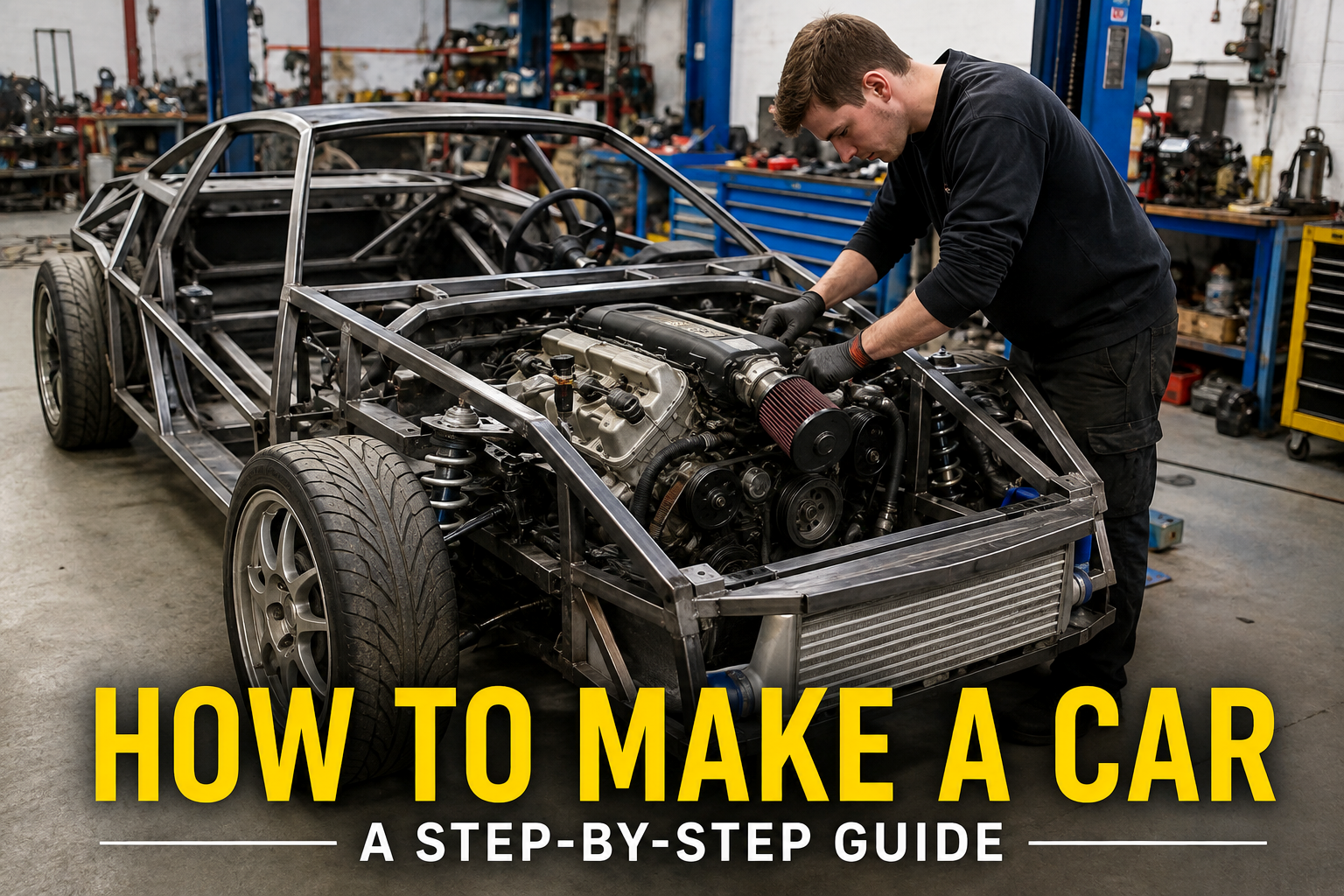
Making a car is a complex engineering project that combines mechanical, electrical, computer, safety, and manufacturing systems. A modern car is not simply an engine, four wheels, and a body; hundreds or thousands of components must work together reliably. If you want to understand how to make a car, the best place to start is by learning how the major systems are designed, assembled, tested, and prepared for safe use. This guide explains the process in a simple way without assuming advanced engineering knowledge.
What Do You Need to Make a Car?
Before building a car, engineers determine what the vehicle is supposed to do. A small city car, electric vehicle, sports car, and off-road vehicle can require very different designs. The main areas involved include:
- Vehicle frame or chassis
- Body and exterior structure
- Engine or electric motor
- Transmission or drive system
- Suspension and steering
- Braking system
- Wheels and tires
- Electrical and electronic systems
- Interior and safety equipment
- Software and control systems A real road-going vehicle also needs extensive testing and must meet the safety and legal requirements of the country where it will be used.
Also read: How to Change Oil in a Car
How to Make a Car
Building a car involves several stages, from choosing the vehicle design to testing its safety and performance. Here are the main steps:
1. Decide What Type of Car You Want
The first stage is defining the purpose of the vehicle. You need to consider its size, number of passengers, power source, expected performance, driving environment, and intended use. For example, an electric car will be designed around a battery pack and electric motors, while a traditional gasoline vehicle is designed around an internal-combustion engine and fuel system.
2. Create the Vehicle Design
Engineers then develop the overall design of the car. This includes the shape of the body, location of major components, interior space, weight distribution, and aerodynamic requirements. Computer-aided design software is commonly used to create detailed digital models before physical components are produced.
3. Build the Chassis
The chassis provides the main structural foundation of a vehicle. It supports important components such as the suspension, drivetrain, body, and other systems. The structure needs to be strong enough to handle normal driving forces while also contributing to occupant protection during a collision.
4. Choose and Install the Power System
A car needs a system that produces the energy required for movement. In a gasoline or diesel vehicle, this is usually an engine. In an electric vehicle, batteries supply electricity to one or more electric motors. The power system must be properly integrated with the vehicle’s cooling, electrical, control, and drivetrain systems.
5. Add the Suspension and Steering
The suspension connects the vehicle to its wheels and helps maintain stability and comfort while driving. Steering allows the driver to control the direction of the vehicle. These systems have to be carefully designed because incorrect geometry or component selection can make a vehicle difficult or unsafe to control.
6. Install the Braking System
Brakes are one of the most important safety systems in a vehicle. They allow the driver to slow down and stop the car. Modern vehicles may also include electronic systems such as anti-lock braking and electronic stability control. These systems require proper engineering and testing rather than simple installation.
7. Add the Electrical and Electronic Systems
Modern cars contain many electronic components. Depending on the vehicle, these can include lighting, sensors, displays, cameras, driver-assistance systems, entertainment equipment, and computerized controllers. Electric vehicles have additional high-voltage components that require specialized engineering and safety procedures.
8. Build and Install the Interior
After the major mechanical systems are planned, the interior can be developed around the driver and passengers. Seats, dashboard controls, displays, climate controls, seat belts, airbags, and other safety equipment are integrated into the vehicle. Comfort is important, but safety and proper operation are the priority.
9. Assemble the Body and Exterior
The exterior body panels and other components are fitted around the vehicle’s structural and mechanical systems. Manufacturers also consider aerodynamics, visibility, lighting, weather protection, and pedestrian safety. At this stage, the vehicle begins to resemble the finished product.
10. Test the Vehicle
A car should never be considered finished simply because all its parts have been assembled. Engineers perform extensive testing to evaluate braking, steering, acceleration, stability, durability, electrical systems, temperature performance, and safety. Manufacturers also test vehicles under different road and environmental conditions to identify problems before production.
11. Meet Legal and Safety Requirements
A vehicle intended for public roads must comply with applicable laws and safety standards. Requirements can cover lighting, brakes, emissions, crash protection, seat belts, mirrors, tires, electrical systems, and many other areas. The exact requirements depend on the country or region.
12. Final Inspection
Before a vehicle is delivered, it goes through quality checks. Technicians and inspectors look for manufacturing defects, incorrect assembly, electrical problems, fluid leaks, warning lights, and other issues. Only after appropriate testing and approval should a vehicle be considered ready for its intended use.
Also read: What Does White Smoke From Exhaust Mean
Can You Make a Car at Home?
It is possible for experienced automotive builders to construct or heavily modify vehicles, but creating a safe, road-legal car from scratch is much more complicated than assembling a few parts. A person interested in learning can start with automotive design, basic mechanical engineering, electronics, computer-aided design, or supervised vehicle projects. Any project involving structural, braking, steering, fuel, or high-voltage systems should be handled with appropriate professional knowledge and safety procedures.
How Long Does It Take to Make a Car?
The time required depends on what is being built. A major automobile manufacturer may spend years developing a new vehicle before mass production begins. A custom project can also take months or years depending on its complexity, available parts, engineering work, testing, and the builder’s experience. Designing the vehicle is only one part of the process; testing, manufacturing, quality control, and regulatory approval can take significant additional time.
How Much Does It Cost to Make a Car?
There is no single cost because the price depends heavily on the vehicle’s design and components. A manufacturer producing thousands of vehicles can spread development and tooling costs across many cars, while an individual building a one-off vehicle may pay considerably more per vehicle. The cost can include:
- Design and engineering
- Chassis and body components
- Engine or electric powertrain
- Battery and electrical equipment
- Suspension and brakes
- Wheels and tires
- Interior components
- Electronics and software
- Testing and certification
- Tools and manufacturing equipment
What Is the Hardest Part of Making a Car?
One of the biggest challenges is making every system work together safely. An engine or motor might work correctly by itself, but the finished vehicle also needs reliable steering, braking, suspension, electrical systems, cooling, controls, and structural protection. The real challenge is not simply making a car move. It is creating a vehicle that can operate reliably and safely under many different conditions.
Common Mistakes to Avoid
People learning about vehicle construction can easily underestimate the importance of safety and testing. Some common mistakes include:
- Designing without considering vehicle weight and balance
- Treating braking and steering as simple components
- Ignoring electrical safety
- Using unsuitable components
- Failing to test systems individually and together
- Assuming a vehicle is road-legal without checking local requirements
- Making modifications without understanding their effect on other systems
Aldo read: Why Is My New Car Battery Draining So Fast?
Conclusion
Learning how to make a car involves much more than assembling an engine and attaching wheels. A complete vehicle requires careful planning, structural design, a reliable power system, steering, suspension, brakes, electronics, safety equipment, testing, and legal approval. For beginners, studying how each automotive system works is the safest and most useful way to understand vehicle engineering before attempting any physical project.
Frequently Asked Questions
1. Is it possible for one person to make a car?
Yes, an experienced builder can create a custom vehicle, but designing a safe and reliable road-going car requires knowledge of several engineering disciplines and compliance with applicable regulations.
2. What is the most important part of a car?
There is no single most important component. Safety depends on many systems working together, including the structure, brakes, steering, suspension, powertrain, and electronic controls.
3. Can I build an electric car?
Electric vehicles can be developed around electric motors and batteries, but high-voltage battery systems require specialized knowledge and appropriate safety procedures.
4. Do cars need computers?
Modern vehicles rely heavily on electronic control systems and computers for functions such as engine management, battery management, safety systems, displays, and driver assistance.
5. Can a homemade car be driven on public roads?
That depends on local laws. A privately built vehicle may need inspection, registration, certification, insurance, and other approvals before it can legally be driven on public roads.